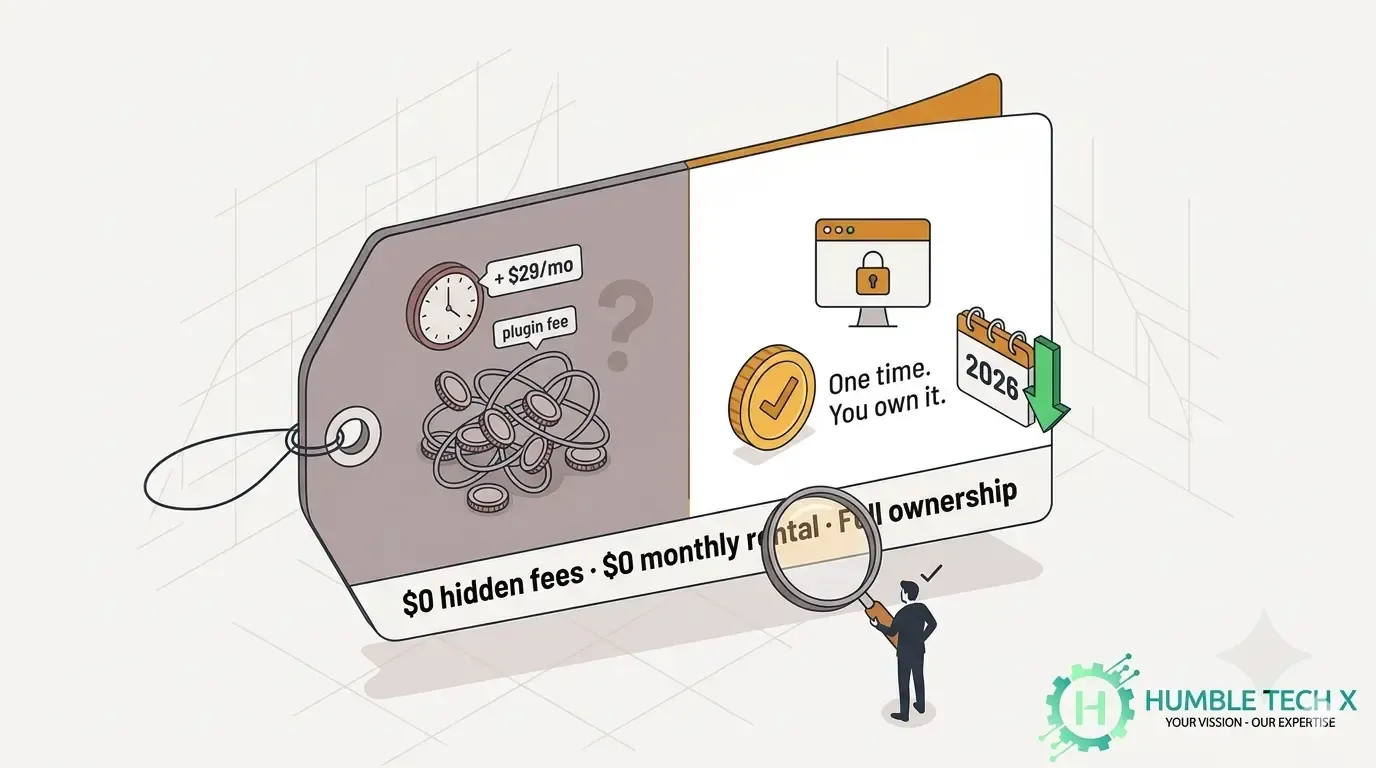
Affordable web design in 2026 doesn’t mean cheap quality. Learn real website pricing, what affects cost, and how to choose a budget-friendly website that still delivers speed, SEO, and conversions.
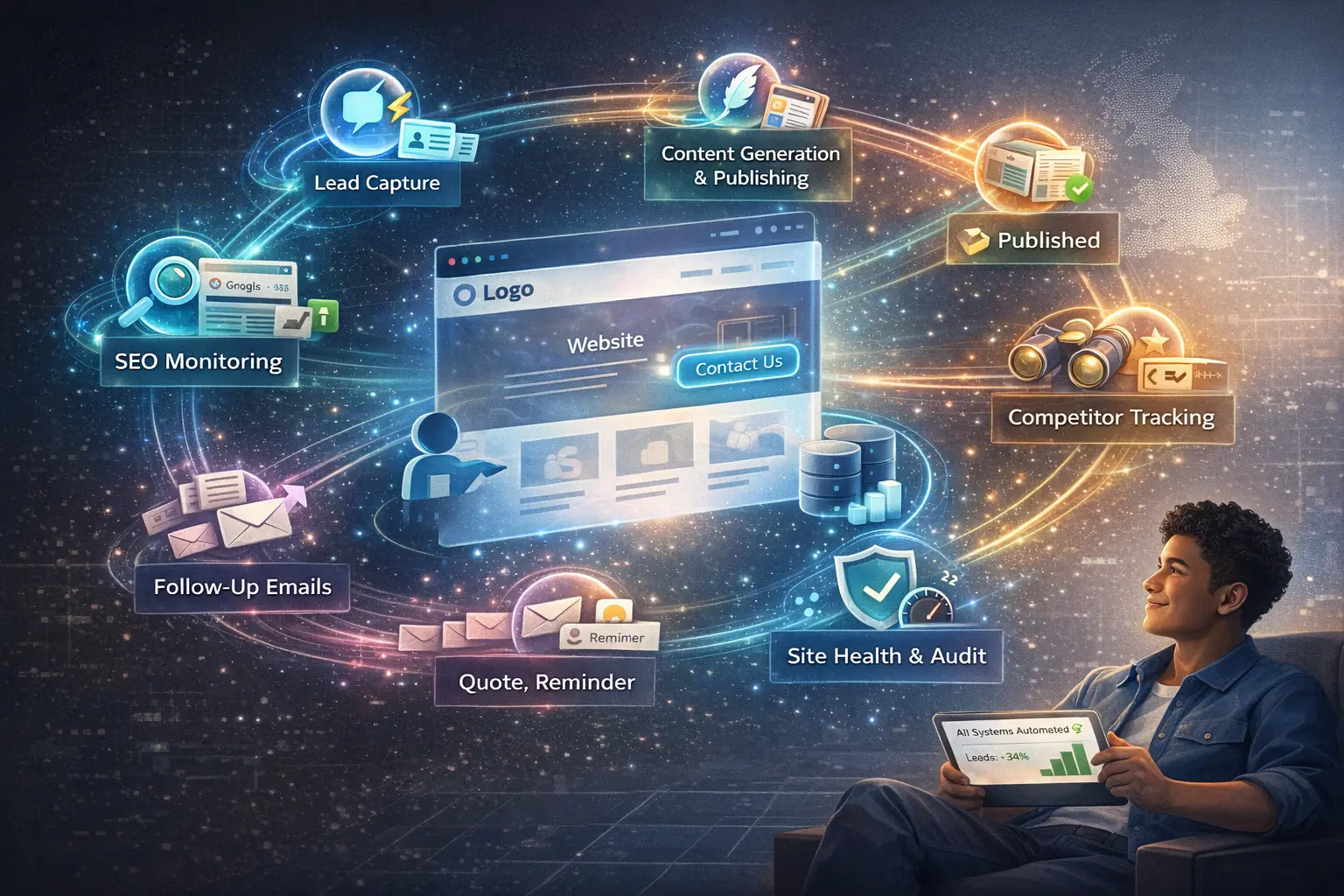
The 6 Things Your Website Should Be Doing Automatically Right Now
AI agents can now run your website automatically — from answering leads to optimizing SEO and publishing content. Discover 6 powerful things AI agents can handle for your business website and how they turn traffic into customers in 2026.
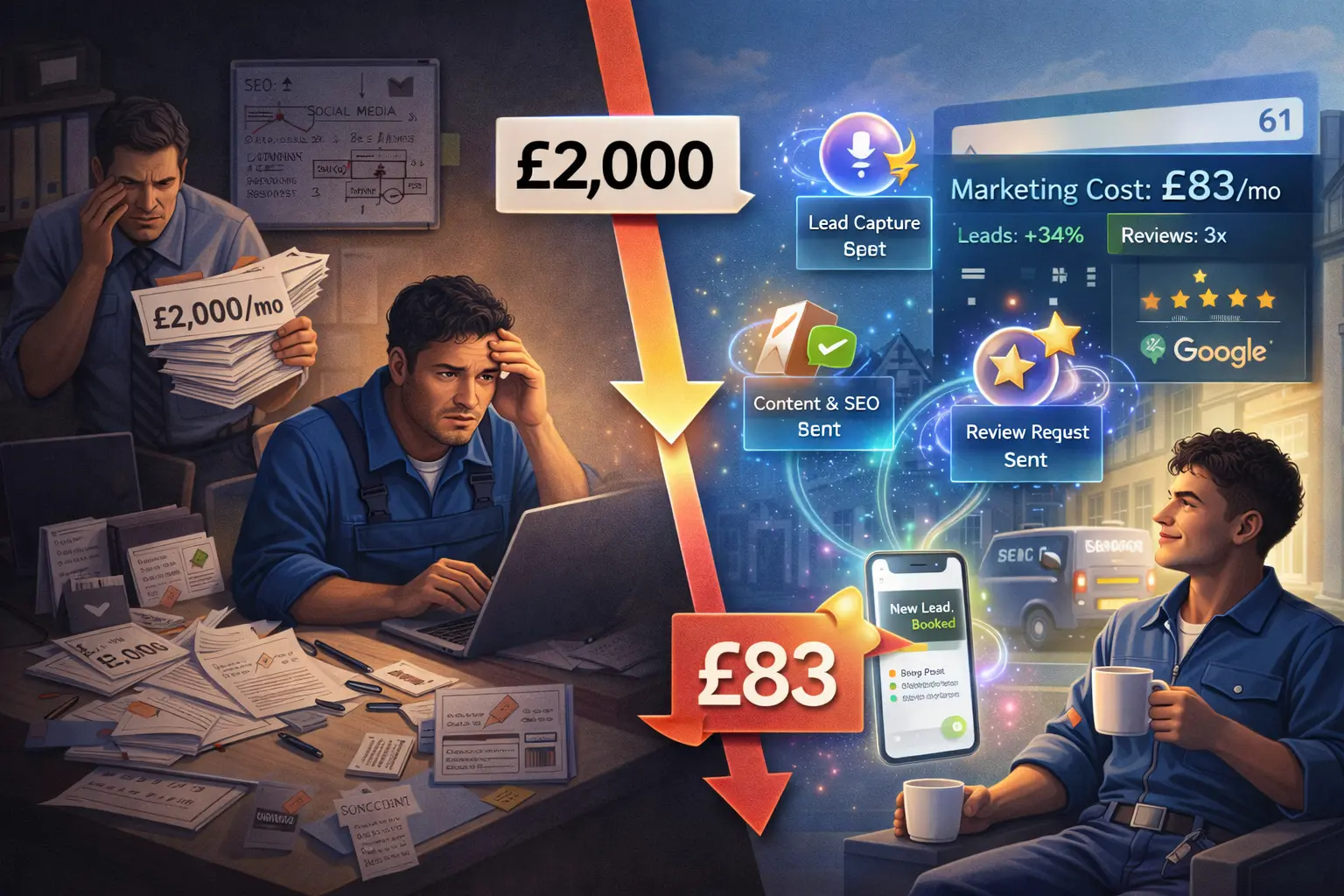
How AI Agents Replaced a £2,000/Month Marketing Manager for a UK Small Business
A UK plumber replaced a traditional marketing manager with AI agents — and started generating leads automatically. Learn how AI handled SEO, enquiries, follow-ups, and website optimization to turn a small service business into a 24/7 marketing machine.
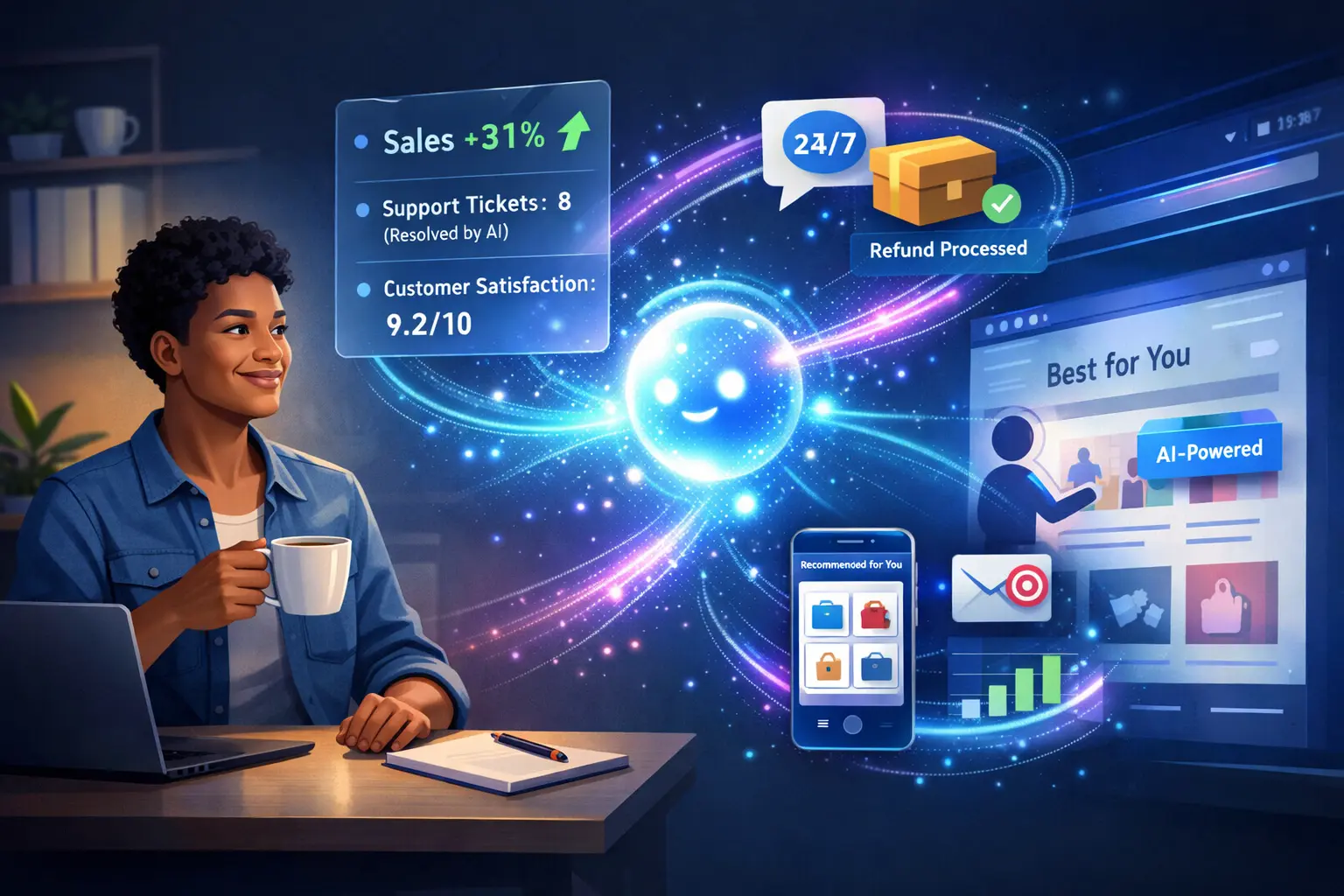
What Is an AI-Powered Website and Does Your Small Business Need One in 2026?
Executive Summary: An AI-powered website uses artificial intelligence (AI) tools—often called AI agents—to automate tasks and deliver personalized experiences. AI agents on websites can chat with customers, tailor content, qualify leads, and even generate marketing copy. For example, an AI chatbot can answer FAQs 24/7, and AI-driven recommendation engines can suggest products that boost sales. These smart systems save time and money (IBM notes they can handle complex tasks with minimal human input 1), but they also come with costs (subscription or development), maintenance needs, and privacy considerations 2. Small businesses should weigh their customer volume, budget, and industry needs: firms facing lots of routine inquiries or content demands often benefit most 3 4. Ultimately, AI tools are increasingly mainstream (80% of marketers use AI now 5), so even small companies should consider a pilot. In 2026, an AI-powered site is a competitive option for many, but not a necessity for every business. Below, we define key terms, show 5 concrete use cases (with real benefits), and list criteria to help decide if you should invest in one. Suggested Headings: What Is an AI-Powered Website? An AI-powered website is one that embeds AI technologies to handle functions automatically or to personalize user interactions. Rather than relying only on static pages and manual processes, an AI-powered site can adapt dynamically. For example, it might adjust content based on a visitor’s behavior or use AI chatbots to engage customers. An AI-powered site often integrates AI agents – autonomous software programs that perform tasks by combining natural language and data analysis. IBM defines an AI agent as “a system that autonomously performs tasks by designing workflows with available tools” 1. In practice, AI agents can range from chatbots and recommendation engines to advanced back-end processes. Essentially, an AI website uses these agents to work behind the scenes (and sometimes front-and-center) to improve efficiency and user experience. How AI Agents Work on Websites On a website, AI agents act like virtual assistants. A visitor might ask a question in a chat window, and an AI agent uses natural language processing to understand it. It can then pull data from the backend (product databases, knowledge bases, CRM, etc.) and reply. Unlike rigid scripted bots, these agents “are goal-driven and autonomous” – they interpret intent, adapt responses, and execute complex workflows. For instance, if a customer asks, “Where is my order?”, an AI agent can authenticate the user, look up the order in the e-commerce backend, and respond with status updates, all without a human agent. In effect, the AI agent coordinates user input and data systems to deliver an outcome. The flow might look like this: [Diagram: Visitor ↔ AI Agent ↔ Backend Systems] This simple flowchart shows the loop: a visitor interacts with the AI agent, the agent queries backend systems for information or actions, then the agent delivers an outcome (an answer or completed task) back to the visitor. Importantly, modern AI agents learn and improve over time (storing interactions in “memory” and refining their models), so they can handle increasingly complex queries and reduce the need for manual handovers 7 2. 5 Website Tasks AI Agents Can Automate AI agents shine at repetitive or data-driven tasks on a website. The table below lists five concrete tasks, along with example tools or technologies, a real use-case scenario, and typical ROI or benefits: Task Example AI Tool / Tech Business Use Case Typical ROI / Benefit Customer Support Chatbot GPT-4-based chat (e.g. Intercom AI) An online store adds a chatbot to answer FAQs, track orders, and handle refunds any time. It instantly resolves common queries (shipping status, return policy, etc.). Deflects ~60–85% of routine queries (no human needed) 8, providing 24/7 support. Amex reduced support costs ~25% and boosted satisfaction by ~10% with a chatbot 9. Saves thousands of agent-hours. Product Recommendations AI recommendation engine (e.g. Algolia Recommend) A retail website uses AI to suggest products (“Customers also bought…”). Personalized recommendations can drive up to ~31% of e-commerce revenue 10. Sessions with engaged recommendations see ~369% higher average order value 11. Increases conversion and sales without extra ad spend. Email / Marketing Automation AI-driven email platform (e.g. HubSpot AI, Mailchimp AI) A small B2C business automates email campaigns: sending tailored follow-ups to leads or customers (e.g. cart abandonment, birthdays) using AI-personalized content. Email marketing yields ~$36-42 return per $1 spent 12. Personalized emails convert ~6× more often 14. AI ensures timely, relevant outreach, boosting open rates and revenue. Content Creation & Copy AI writing assistant (e.g. ChatGPT, Jasper) A local service provider uses AI to draft blog posts, social posts, or product descriptions. Content marketing typically returns ~3× the investment 15. With AI, businesses report up to 88% faster content production and efficiency gains 5. Frees owner’s time and can scale content output without hiring. Lead Scoring / Qualification CRM AI (e.g. Salesforce Einstein) A B2B company’s website captures inquiries. An AI agent analyzes each lead’s data (industry, behavior, past interactions) to score and prioritize them for sales follow-up. Focuses sales on “hot” leads. AI lead scoring predicts who will convert better than rule-based systems 16 17. Improves conversion rates and shortens sales cycles by targeting high-potential clients first. Each use case above is based on real-world implementations of AI agents or similar automation tools. For example, E-commerce sites use chatbots like Fin by Intercom (powered by GPT) to reduce support tickets 18, and retailers like H&M saw chatbot interactions lift conversions ~25% 19. The ROI figures (e.g. 10x ROI on emails, 12 hours saved per month) come from industry studies and vendors. For instance, Intuit found SMBs save ~12 hours/month on average using AI agents 20, and marketers often see multi-hundred-percent ROI on AI-driven campaigns 10 12. Benefits vs. Drawbacks of AI on Your Website Benefits: Integrating AI agents can offer big advantages. Key benefits include: Drawbacks/Risks: However, caution is needed: In summary, AI agents deliver productivity and personalization advantages 32, but they also introduce costs (and complexity) that must be weighed