

In 2026, your website’s loading speed isn’t just a nice-to-have—it’s a direct ranking multiplier. Google’s March 2026 Core Update made that crystal clear. Slow sites aren’t just losing a few positions; they’re dropping entire traffic segments while fast ones climb. For small businesses, this shift means one thing: every extra second on your pages is now costing you visibility, leads, and sales. The good news? You don’t need a big budget or a developer team to fix it. A few smart tweaks can turn your site from “good enough” to a ranking winner.
The March 2026 Core Update Changed Everything
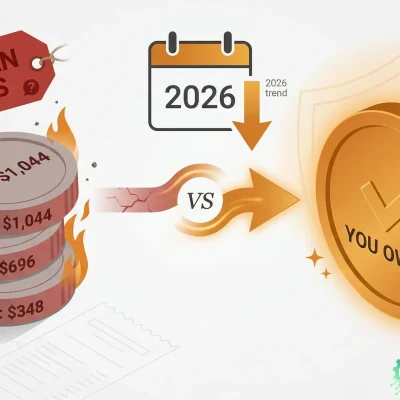
When Google rolled out the March 2026 Core Update on March 27, it didn’t just tweak a few signals—it fundamentally changed how site speed is judged. For the first time, Core Web Vitals are now scored holistically across your entire website, not page by page. That means one slow landing page or outdated blog post can drag down your whole domain.
Early data shows affected sites lost 20–35% of their organic traffic. The update also tightened what counts as “good.” Largest Contentful Paint (LCP) thresholds became stricter, Interaction to Next Paint (INP) moved from helpful to essential, and poor performers saw clear ranking drops. Google now treats speed as a multiplier: fast sites with solid content get boosted, while slow ones—even with great content—get pushed down.
This isn’t punishment. It’s Google prioritizing real user experience in a world where people expect instant answers. If your site feels slow on mobile (where most searches happen), the update made that a competitive disadvantage. Small businesses that acted fast saw recovery or gains within weeks. Those who ignored it are still feeling the drop.
How a 1-Second Delay Costs You 4.42% of Conversions
Here’s the part that hits your bottom line: every extra second of load time costs real money.
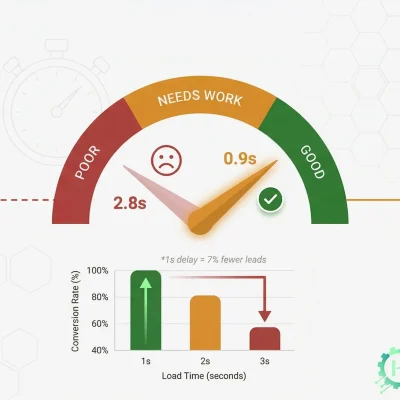
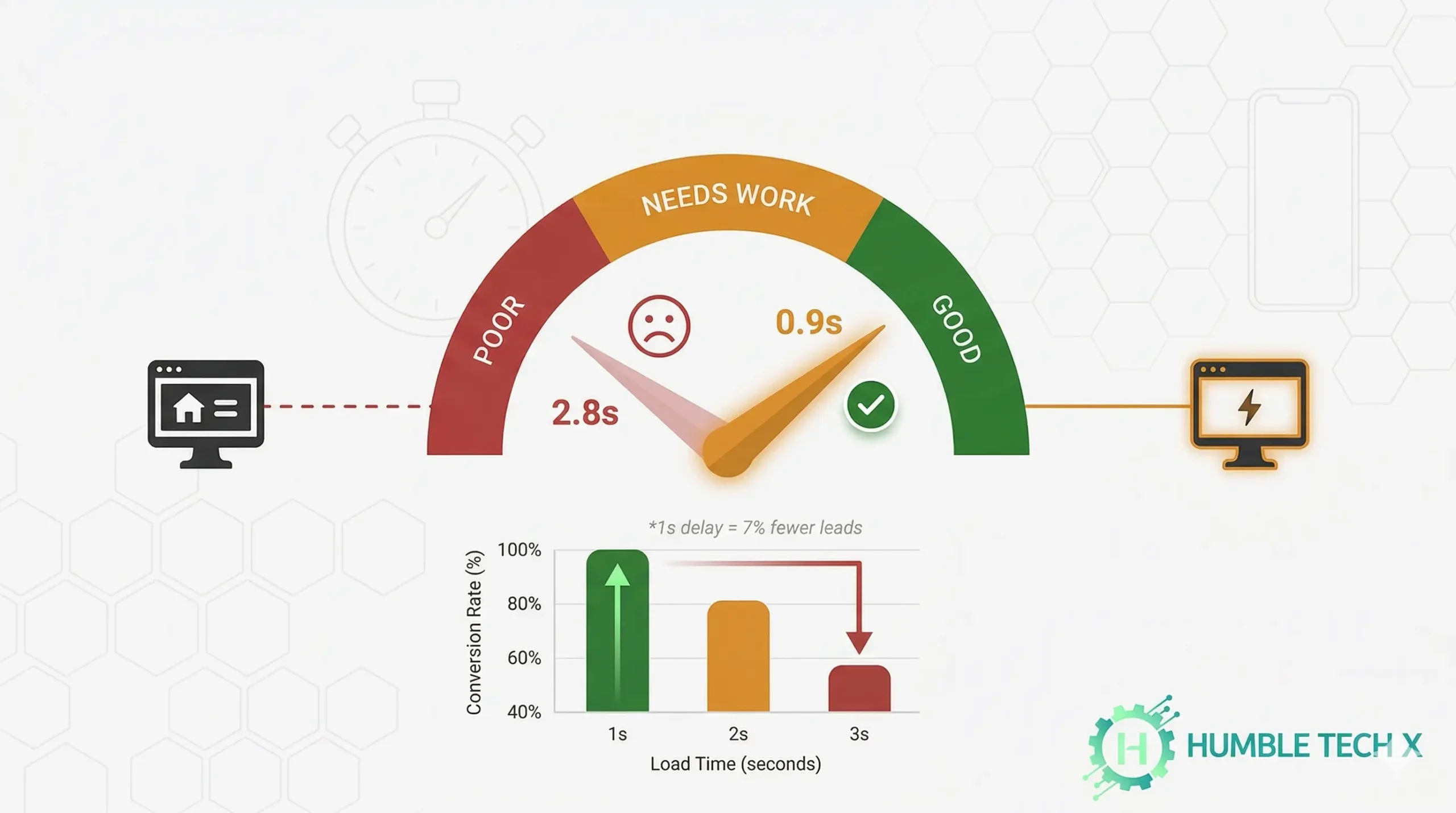
Studies consistently show that a one-second delay reduces conversions by noticeable percentages. In 2026 data, that figure lands at 4.42% for many lead-generation and e-commerce sites. It adds up fast. A site getting 1,000 monthly visitors with a 3% conversion rate should see 30 enquiries. Add one second of delay and you’re suddenly looking at 28–29 enquiries instead—losing one or two every single month. Over a year? That’s 12–24 lost opportunities.
Mobile makes it worse. People on phones are even less patient. A slow site doesn’t just frustrate them—it sends them straight to your faster competitor. The March 2026 update amplified this effect because Google now rewards sites that keep users happy from the first click.
The 3 Core Web Vitals Metrics Explained (No Jargon)
Google measures three simple things that decide if your site feels fast and smooth. No tech degree required—these are plain-English user experiences.
Largest Contentful Paint (LCP) This measures how quickly the main thing on your page (usually the big headline, hero image, or product photo) actually appears. Good = under 2.5 seconds. If it takes longer, visitors stare at a blank or half-loaded screen and bounce. The 2026 update made this even more important—borderline 2.5-second pages now count as “needs improvement.”
Interaction to Next Paint (INP) This checks how responsive your site feels when someone clicks a button, taps a menu, or fills a form. Good = under 200 milliseconds (that’s less than the blink of an eye). If it lags, people feel like the site is broken. INP replaced the older metric and is now a major ranking signal after the March update.
Cumulative Layout Shift (CLS) Ever tried to tap a button only for the whole page to jump and you hit the wrong thing? That’s CLS—how much the page layout shifts around while loading. Good = under 0.1. A low score means everything stays exactly where visitors expect it. High CLS frustrates users and hurts rankings.
Aim for all three to be “Good” on at least 75% of your real visitors. That’s what Google checks.
Speed-to-Lead Calculator
Here’s a dead-simple way to see exactly how much money slow speed is costing you right now.
Speed-to-Lead Calculator
- Take your average monthly website visitors (check Google Analytics).
- Take your current average conversion rate (enquiries or sales divided by visitors).
- Note your current average load time in seconds (from PageSpeed Insights).
- Subtract 2 seconds (the 2026 target for fast sites).
Math: Lost enquiries per month = Monthly visitors × Conversion rate × (Extra seconds beyond 2) × 0.0442
Example: 1,200 visitors per month 3% conversion rate Current load time = 3.8 seconds (1.8 seconds too slow)
Lost enquiries = 1,200 × 0.03 × 1.8 × 0.0442 ≈ 2.86 enquiries lost every month. That’s 34 lost leads per year—purely from speed.
Run the numbers for your own site. The result usually surprises owners.
DIY Speed Audit in 10 Minutes
You can check your entire site in under 10 minutes—no tools or cost required.
- Go to Google PageSpeed Insights (pagespeed.web.dev).
- Type in your homepage URL and hit Analyze.
- Do the same for your most important pages (contact, services, product pages).
- Look at the mobile score first—Google ranks mobile.
- Check the Core Web Vitals section for LCP, INP, and CLS. Green = good.
- Scroll to “Opportunities” for quick wins like “Optimize images” or “Reduce unused JavaScript.”
- Open Google Search Console → Core Web Vitals report for site-wide data.
If your PageSpeed score is under 85, you have real room to improve—and the March 2026 update will reward you for it.
Common 5-minute fixes: compress images, turn on browser caching, remove heavy plugins, and switch to a faster host if needed.
A Case Study: From 2.8s to 0.9s
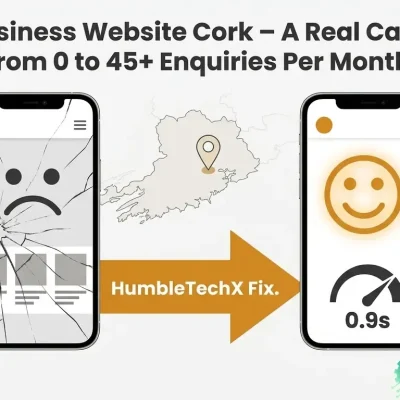
“QuickFix Plumbing” is a small family business in a busy Pakistani city. In early 2026 their site loaded in 2.8 seconds on mobile. Decent SEO, good reviews, but after the March Core Update their organic traffic dropped 28% in three weeks. Leads slowed to a trickle.
They ran the DIY audit and found bloated hero images and too many tracking scripts. Over four weeks they:
- Compressed and lazy-loaded images
- Switched to a lighter theme
- Moved to a faster local hosting plan
- Added basic caching
Result? Average load time dropped to 0.9 seconds. All three Core Web Vitals turned green. Within six weeks traffic recovered and then grew 19% above pre-update levels. Leads jumped 41%—without spending a rupee on ads. The owner now says the free speed fixes paid for themselves in the first month.
The Bottom Line for 2026 and Beyond
Site speed is no longer just a technical checkbox. Thanks to the March 2026 Core Update, it’s a ranking multiplier that separates winners from also-rans. Fast sites get more visibility, happier visitors, and more enquiries. Slow ones quietly disappear from search.
Run Google’s PageSpeed test right now. Under 85? Let’s fix it. Free speed audit → humbletechx.com
Your website is your 24/7 salesperson. Make it fast, and it will work harder for you than ever before. The tools are free. The opportunity is now.